About Red Light Therapy
We know from the research that light therapy helps promote tissue regeneration, reduce inflammation, increase circulation, and relieve pain which aids in maintenance and recovery.
We know from our customers that it works! We have been helping people help their animals since 2004! To learn more about light therapy and how it can help your animals, please watch the following video.
Red Light Therapy Products for Horses, Dogs, and Pets
Safe, effective light therapy for horses, dogs, cats, and all animals, giving your furry friends the comfort they deserve.


Science based technology, research proven results!
Benefits of Red Light Therapy for Horses and Dogs
Now you can have the same powerful healing energy of a laser at a fraction of the cost.
For years, Equine Light Therapy® and Canine Light Therapy™ have been helping animals stay stronger for competition and recover faster by putting the power of healing in a simple, easy to use tool for everyday treatment.

LED light therapy is really a way to help the body heal itself. The lights have specific wavelengths that are absorbed by a photo acceptor, cytochrome c oxidase within the mitochondria of the cell. The energy (photons) from the lights increases the energy within the cell and that speeds up the healing process. The lights must be specific wavelengths and must be delivered at a specific dosage. Using both red and infrared lights is beneficial because the wavelengths are absorbed by different depths of tissue.

Our Equine & Canine Light Therapy Pads use two specific wavelengths that research has shown to dramatically increase the rate of healing. The two wavelengths are in the visible red and near infrared spectrums. The visible red is effective for stimulating acupuncture points, releasing trigger points, treating wounds and infections. The infrared wavelength (not visible), which penetrates deeper, has been shown to be effective in helping heal soft tissue injuries, joints and muscles.
Help your animal friends feel better much faster… Order Now!


What Red Light Therapy Can Do for Your Animal Friends
Ways red light therapy may help your canine, equine, or other animal companions include:
- Increased circulation by the formation of new capillaries
- Significant increases in wound healing with less formation of scar tissue
- Reduction in edema
- Helps reduce inflammation, which helps reduce pain
- Helps increase range of motion
- Helps improve immune cell production
- Relaxation of muscles
- Stimulation of collagen production
- Relief of minor aches and pains
- Increases RNA and DNA synthesis
- Stimulation of trigger and acupuncture points

PREVENT - MAINTAIN - HEAL
With the Power of Light
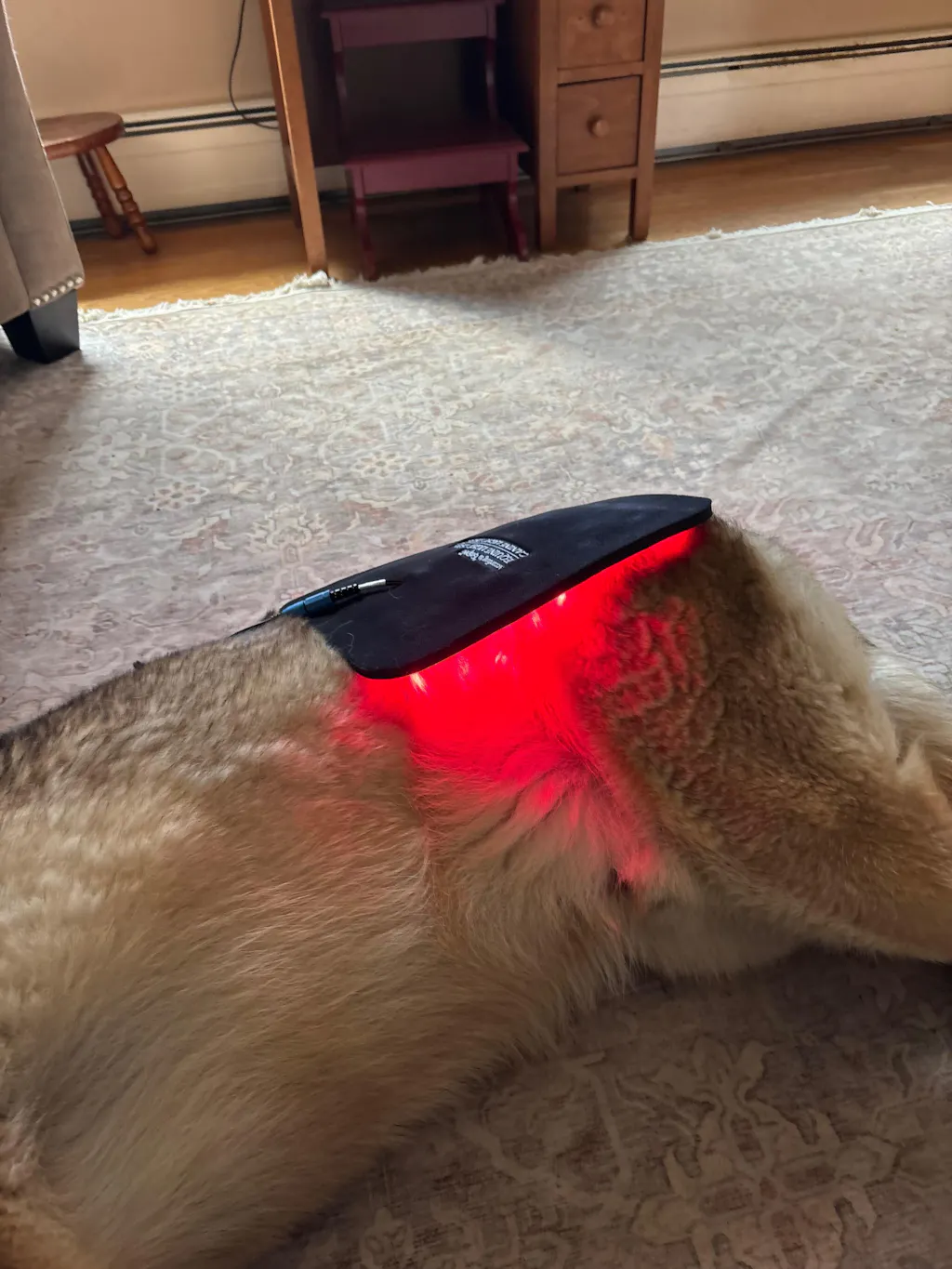
Having been both horse and dog owners, we understand the importance of making the most of time and money. Our Light Therapy pads are available in four sizes and are designed to be used all over the horse’s or dog’s body. Unlike other light therapy products, our Light Therapy pads flex both ways, top to bottom and side to side, this makes it easy to wrap around the hoof, the ankle, knee, suspensory or hock. You can leave it flat and place it on the shoulder, neck, back or poll.
Treatment time is under 15 minutes per area with “Gospel’s” Equine or Canine Light Therapy pad! We offer a 30 Day Money Back Guarantee with every pad we sell, that means you can try it at home with no risk.
Our Equine and Canine Light Therapy pads are designed, manufactured and distributed in our own facility in the heart of Tennessee. We are truly Made in America!


Red Light Therapy FAQs for Horses and Dogs
Don’t see your question here? Give us a call. We’d be more than happy to answer any questions you may have.
What size pad should I buy?
It really depends on what area you need to treat. We have horse folks who buy a Small Light Therapy pad to treat a tendon or ligament and we have dog folks who purchase a Large Light Therapy pad so they can treat both hips at the same time!
The best thing to do is take a piece of paper, fold it to the sizes you are most interested in, and then lay it over the area you wish to treat and see if it is the best size for you. The Itty Bitty is 9-1/2" x 4-1/2", the Small is 9-1/2" x 7", the Medium is 9-1/2" x 12", an inch wider and an inch longer than a standard sheet of paper and the Large is 12" x 17". Lay or wrap the sizes and see which one will best cover the area. Always let us know if you have additional questions.
How long and how often should I use the "Gospel's" Light Therapy pad on my horse or dog?
Current research has defined 6-8 joules per square centimeter as the recommended dosage for tissue absorption, our light therapy pads deliver approximately 9-10j/cm2. This may be achieved in under 15 minutes per area with any of our Light Therapy pads.
Animals are very sensitive to the energy of the lights, always pay attention to your animal, they may want you to use it the full time one day and a shorter time the next. We hear this over and over. They are smart, they may even tell you where they would like you to use it!
You can use the Light Therapy pad twice a day per area for maximum benefit, the time between treatments should be approximately 6 hours. This usage helps keep the injured or energy-starved cells charged.
The most important consideration is consistency, your animal will receive the greatest benefit if the Light Therapy pad is used on a regular basis.
There has never been any indication of the slightest side effect or unintended effect documented. These treatment parameters are based on what we've researched and observed.
Are "Gospel's" Light Therapy pads only for injuries?
No, for many of our clients "Gospel's" Light Therapy pads are a regular part of their daily training program. Many use them as a way to keep their animal partners in top shape.
Are "Gospel's" Light Therapy pads only for horses and dogs?
No, "Gospel's" Light Therapy pads have been used on horses, dogs, cats, donkeys, goats, rabbits, monkeys, rams, cows, pigs, and reindeer!
Is there any way I should not use the Light Therapy Pad?
Never use over a malignant tumor on any animal unless instructed by a qualified veterinarian.
Do not use on pregnant mares or pregnant dogs abdominal area, not because it is harmful, we have found no studies citing use on pregnant mares or dogs, so prefer to err on the side of caution.
Don't look directly into the lights.
Don't shine the lights directly into the eyes of any animal (or person). Prolonged use of the lights directly into the eye may cause problems.
Caution must be used if photosensitive drugs such as, but not limited to, tetracycline are being administered.
Must I stay with my horse or dog while using the "Gospel's" Light Therapy pad?
Absolutely! Never leave your animal unattended while using the "Gospel's" Light Therapy pads.
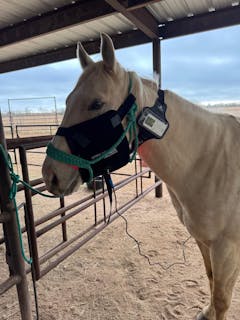
Make sure your animal is in a place where he is comfortable. If your horse cross-ties well and is comfortable in cross-ties that is a great place. Other folks treat the horse in his stall with a halter and a lead rope on and let them eat a little hay during treatment.
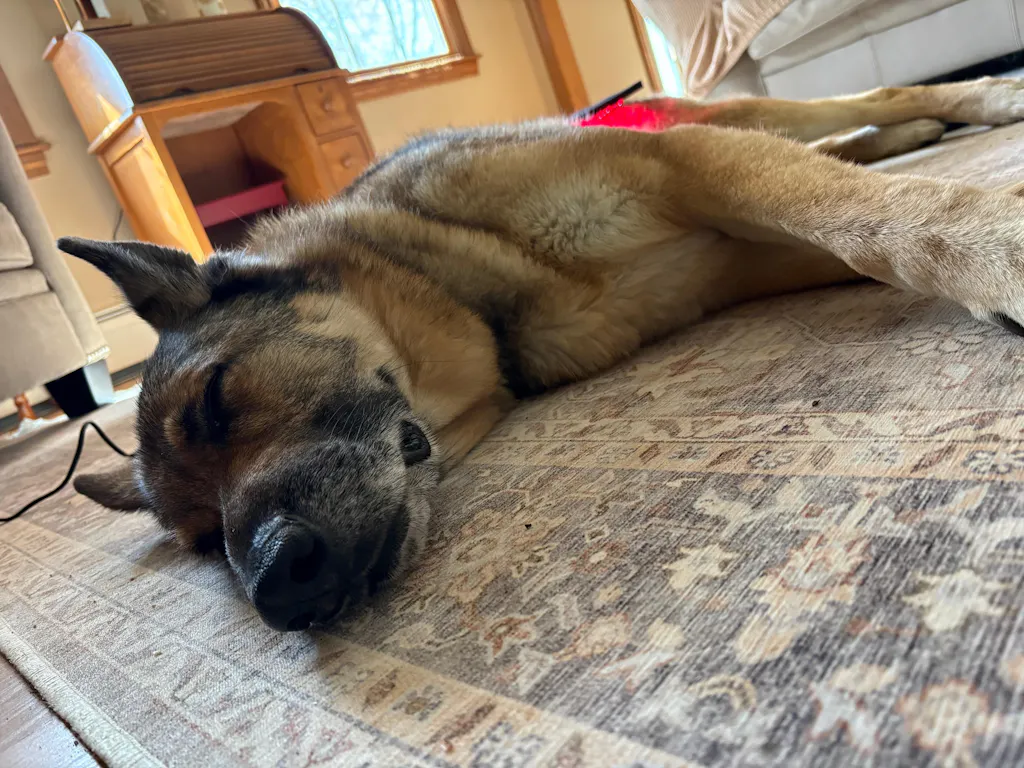
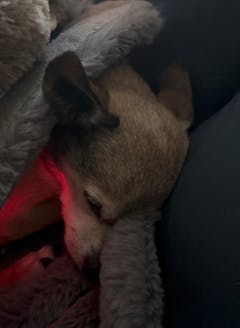
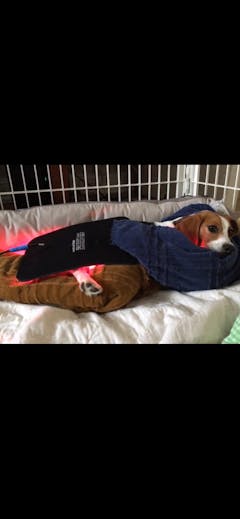
Dogs love Light Therapy! Let your dog stand or lay down in a place that is dry and clean and where they are comfortable and calm.
Light Therapy pad held with duct tape!
I'd like to treat the shoulder area of my horse. Must I stand and hold the Light Therapy pad, or is there another way?
There is another way. We have OneWrap Velcro that you can purchase by the yard, we also have stretchy washable cotton elastic bandages that work well for securing your light therapy pad. Many of our customers use duct tape to help keep the pad in place for other areas. I know it sounds crazy, but if you put the duct tape on with the lay of the hair and take it off with the lay of the hair, the horses seem fine with it.
My dog just had surgery and has staples closing the wound. Can I still use the light therapy pad over the staples?
Yes! The pad will not interfere with the staples in any way.
Can this Light Therapy pad be used on people?
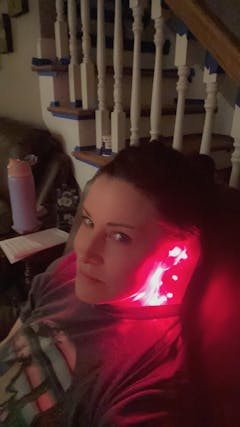
The same wavelengths and treatment times are used for horses, dogs, and humans. The FDA requires a premarket approval clearance for marketing for these types of products before they are advertised for use on people. That being said, most of our clients also use it on themselves but understand that it is an "off label" use and they take full responsibility!